How to Stop Getting Stuck in Patterns
Source: SensorSpot
I recently returned from my third Vipassana retreat — a 10-day silent meditation retreat with complete disconnection from the world.
But this time was different. It was my first retreat since I started coaching full-time.
So, while I gained insights for myself, I also noticed lessons that apply directly to the people I work with.
One of the foundational premises of Vipassana meditation is to simply observe whatever arises — without engaging with it.
Be it your thoughts, emotions, or physical sensations — the practice is to just notice them while keeping your attention focused on bodily sensations, moving from head to toe, and toe to head.
(It may sound monotonous, and that’s part of the training — learning to stay with what is.)
A side note: after the fifth day, you’re even encouraged not to react to something as small as an itch on your nose — and instead, watch it pass.
Through this practice, insights begin to emerge. With no new inputs (thanks to complete disconnection), you slowly build a distance between yourself and your thoughts or feelings. You strengthen your observation muscles.
You might still feel things deeply — I, for instance, experienced strong waves of anger and frustration I didn’t even know I was carrying — yet you also begin to witness them.
It’s almost like being a witness to your own self.
And that, I realised, can be a superpower (without going for Vipassana) — especially when it comes to emotional or behavioural patterns that no longer serve us.
Most of us can stay aware and grounded when our nervous system is regulated. But what about those subtler, in-between stages — when we’re not entirely calm, yet not completely dysregulated either?
Psychologists and spiritual teachers describe this as natural cycles of expansion and contraction.
Expansion is linked to openness, positivity, growth, inspiration, joy, and bliss.
Contraction is associated with closedness, fear, restriction, sadness, and tension.
Experiencing both states is essential for emotional balance. A balanced life involves moving between them — without getting stuck in either.
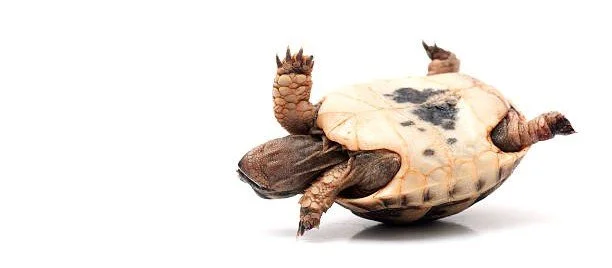
But often, we do get stuck.
We escalate our thoughts and feelings — building stories, gathering evidence, adding more data to support those stories — and end up keeping ourselves hooked in a contracted state.
Think of a moment when your heart or mind felt closed off, and then recall a moment when you felt fully alive.
The sensations in your body are likely different — one might feel tight or heavy (for e.g. I clench my jaw), the other light and expansive.
This is also what happens when we react with the same familiar patterns we’re trying to change.
We judge ourselves. Or, we strive intensely not to repeat it — which ironically creates more contraction.
Even when we deeply want something to happen, there’s often a sense of striving, of tightening around the outcome.
Contrast that with wanting something from a place of openness and flow.
Which one do you think will make you more effective?
When we become witnesses to ourselves, we create just enough distance to see the mind’s narrative — rather than letting it run the show.
From there, we get to choose how to respond.
Of course, as beginners (and even as seasoned practitioners), there will be moments when putting on the “witness hat” isn’t possible in real time.
But we can still interrupt the downward spiral by adding one small phrase before our thoughts:
“The story I’m telling myself is…”
That gentle framing instantly brings awareness and distance.
💡 Tip:
If it’s hard to see how an open or expanded state can support behavioural change, try this small experiment to feel it:
Make a tight fist with your right hand and keep it clenched tightly.
Now, try to open it with your left hand while your right hand resists. How does it feel?
Next, wrap your left hand softly around the fist, holding it in a gentle embrace while your right hand stays clenched. Notice the difference.
You’ll likely feel your right hand begin to soften.
Just as your hand softens, letting go of resistance and contraction opens space for something new to unfold.
Pair it with Mindfulness isn’t Meditation and How to Meditate When You Can’t Stop Thinking.
If you’re curious about working together, you can learn more about my coaching here.